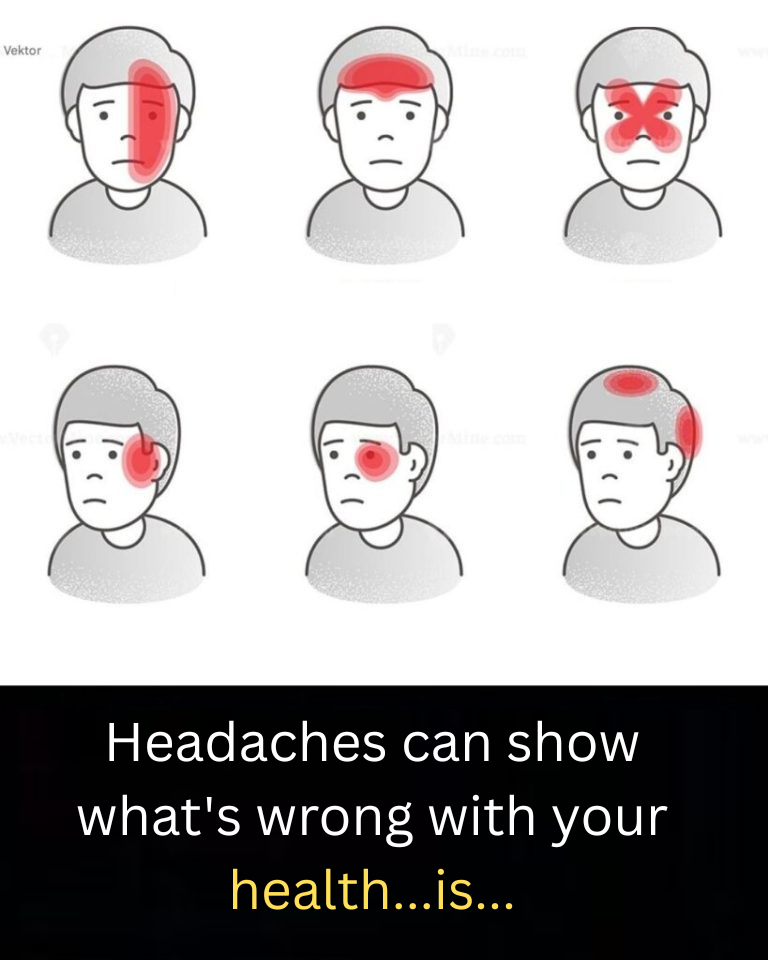
How headaches reveal what’s wrong with your health
Cluster headaches are among the most painful types of headaches. They are characterized by sharp, stabbing pain that occurs in cyclical patterns or “clusters.” Episodes can occur several times a day for weeks or months, followed by long symptom-free periods.
Cluster headaches typically affect only one side of the head and may be accompanied by red eyes, a drooping eyelid, a runny nose, or increased facial sweating on the affected side. Although the attacks are short—often less than an hour—they usually occur at the same time every day.
4. Tension headaches
This is the most common type of headache and is primarily related to stress, anxiety, fatigue, or muscle tension. Muscle tension in the shoulders, neck, and jaw can create pressure in the temples, forehead, or scalp.
Tension headaches can last from a few minutes to several days. Common triggers include emotional stress, poor posture, skipping meals, lack of sleep, or alcohol consumption.
5. Neck pain (cervicogenic headaches)
Cervicogenic headaches originate from problems in the neck area, although the pain is often perceived as originating from the back of the head or the base of the skull. Possible causes include pinched nerves, muscle tension, joint dysfunction, tissue swelling, or spinal abnormalities.
Effective treatment usually aims to address the underlying cause. Many people find relief through massage therapy, acupuncture, physical therapy, or chiropractic, as these methods help correct structural or muscular imbalances.
6. Migraine
Migraine is a severe, throbbing headache often accompanied by nausea, vomiting, and extreme sensitivity to light, sound, or smells. Episodes can last from minutes to several hours.
Some people experience sensory disturbances called auras, which may manifest as flashing lights, wavy lines, visual field defects, or numbness. After a migraine subsides, sufferers often feel exhausted, mentally foggy, or unable to concentrate for several hours.
Don’t miss the continuation on the next page.
See continuation on the next page.