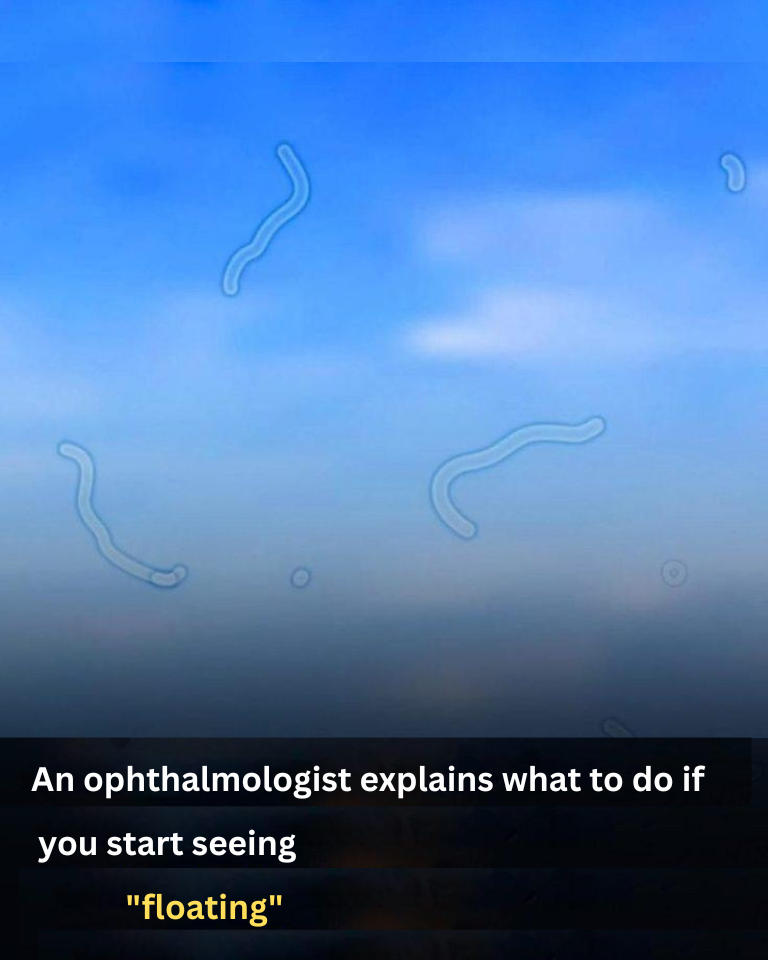
What are floaters? Here’s what you should do if you see them.
3.
Floating Mouches: What Exactly Are They?
Floating mouches are small shapes that we perceive as floating. Sometimes they look like dust motes, tiny bubbles, or even transparent spots. They appear particularly noticeable against bright backgrounds—such as the sky or a white sheet of paper—and seem to move when we try to focus on them. But don’t worry: It’s not your imagination!
This visual phenomenon can be explained by the natural changes inside our eyes. As we age, the gel that fills the eyeball—the vitreous humor—liquefies. During this process, microscopic fibers can clump together and cast shadows on
the retina. The result: the familiar floating mouches.
When should you see a specialist? In most cases, floating mouches are harmless. However, there are certain warning signs that should prompt you to consult an ophthalmologist immediately:
Sudden and significant appearance of these floaters
Flashes of light in your field of vision
A lateral shadow or “curtain” in your field of vision
These symptoms can indicate serious problems, such as a retinal tear or even a retinal detachment. In such cases, prompt action is crucial.
Who is most affected?
While floaters can affect anyone, some groups are particularly susceptible:
People with nearsightedness (myopia)
Patients after cataract surgery
People with diabetes
People over 50
In these cases, the increased fragility of the vitreous humor or retina promotes the appearance of these small shadows.
Treatment options – are they necessary?
In most cases, no treatment is required. The brain adapts over time and “filters out” the floaters. However, if they become very bothersome, there are two medical approaches:
Vitrectomy: The vitreous gel is replaced with a saline solution. Very effective, but only advisable in severe cases, as the procedure carries risks.
———————————————-Click here to continue 👇👇