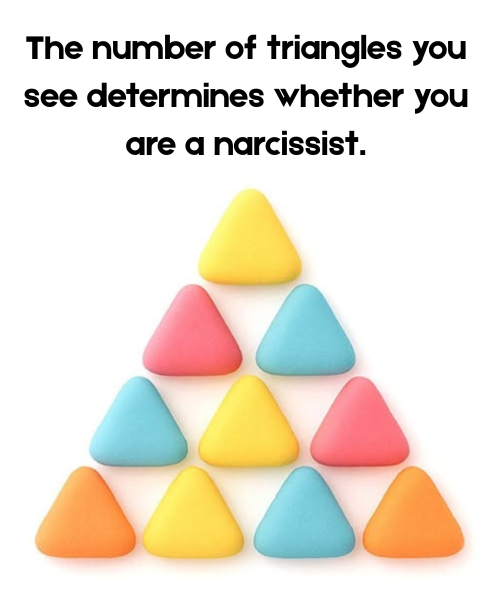
At first glance, the image above seems simple: a few colorful triangles stacked on top of each other. But on closer inspection, the way you count changes. Some see nine triangles, others thirteen, and some even claim to see more than twenty when they add up all the hidden shapes.
This optical illusion has gone viral for one simple reason: it’s not really about math—it’s about how you see the world.
The Illusion Behind the Triangles
The image forms a pyramid of small, candy-colored triangles. Depending on how your brain processes visual patterns, you might simply count the individual pieces or start connecting them to form larger shapes.
Psychologists call this Gestalt perception—our brain’s tendency to focus on the whole rather than individual parts. When you see an image, your subconscious decides whether to focus on the details or the overall picture. And this decision reveals something amazing about your personality.
If You See 9 Triangles
You are likely a realist. You focus on the obvious and practical. You trust what you can clearly see and don’t waste time pursuing possibilities that may not even exist. In relationships and at work, you value stability and simplicity.
However, this approach can lead you to overlook deeper meanings or hidden motives, especially in people. You prefer clarity, but life isn’t always straightforward.
If you see 13–16 triangles:

You are an attentive observer. You notice details without losing sight of the big picture. You examine how things fit together and often read between the lines.
People like you are intuitive yet analytical. You sense when something isn’t right but still seek logical explanations. In social situations, you are empathetic yet cautious—the perfect blend of heart and mind.
If you see more than 20 triangles:
You may be a so-called “pattern amplifier.” They see possibilities everywhere, even where they don’t yet exist. Their creativity and imagination drive them to connect every tiny detail into a grand whole.
And this is precisely where the viral caption comes in: “The number of triangles you see determines whether you’re a narcissist.”
People who overanalyze or exaggerate patterns sometimes tend toward egocentric thinking and assume their interpretation is the only correct one. This doesn’t necessarily mean they’re narcissistic, but rather that they have a strong ego, great confidence in their own perception, and a desire to be right.
In moderation, this is a strength. However, when taken to excess, it can lead to a reduced receptiveness to the perspectives of others.
The Fun of Personality Illusions
Such tests are not intended for diagnosis—they are merely playful prompts to reflect on how our minds work. Whether you saw 9, 13, or 27 triangles, what matters is why you saw them.
Are you drawn to order or to imagination? Do you focus on what’s in front of you or on what might lie beyond?
Our brains are designed to recognize meaning even in simple shapes. This makes humans endlessly curious—and sometimes wonderfully complex.