Skip to content
Finding mysterious objects at your grandmother’s house can be like discovering a small historical treasure. You’ve probably found thimbles there , small tools with a surprisingly rich and fascinating past. Although seemingly simple, these little objects have played an important role in various cultures and throughout the centuries, evolving from practical tools to beautiful collector’s items.
More than just a sewing tool: the journey of a thimble
The history of the thimble is long and fascinating. The very first thimbles were discovered in places like ancient Pompeii, in the 1st century AD. These early versions were often made of simple and sturdy bronze and had one main purpose: to protect a seamstress’s finger from a sharp needle.

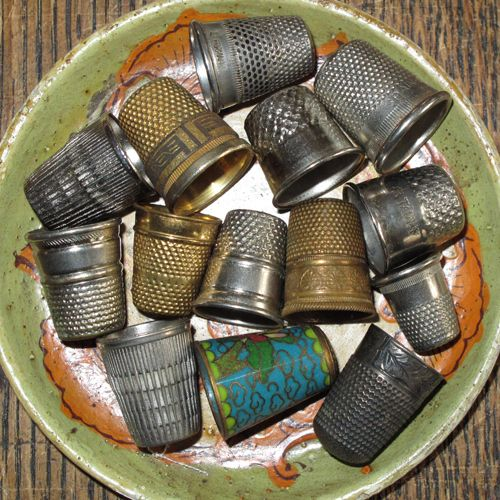
Over time, thimbles took on more creative and decorative forms. In medieval Europe, they were made from various materials such as leather, wood, and various metals. In the 14th century, Nuremberg, Germany, became famous for its expertly crafted brass thimbles. As time went on, thimbles evolved into luxury items. The 17th century saw the creation of magnificent silver and gold thimbles, often decorated with exquisite enamels and precious stones.
From practical tools to cultural icons
Although thimbles are often thought to be strictly for sewing, they were used by many craftspeople. Bookbinders, lacemakers, and leatherworkers all relied on these small tools to protect their fingers while working.

Thimbles have also made their way into popular culture. In the classic tale of Peter Pan , a thimble symbolized a kiss, highlighting its role as a familiar, everyday object. It even appeared as a game piece in the popular board game Monopoly , demonstrating how long sewing has been a common part of daily life.